We have deployed these RFID tags for tracking pallets and cartons in our cross-border logistics operations. The read rate has remained stable even with mixed loading and high-speed conveyor belts. Compared to our previous tags, the false scan rate has been significantly reduced, and it has become much easier for the warehouse team to handle exceptions.
Daniel – Logistics Operations Lead @ International Freight Company
In many applications, RFID tags need to be attached to the surface of a metal object. When a conventional passive UHF RFID tag with a dipole-like antenna is applied to a metal surface, the performance is drastically reduced or even cannot be effectively read.
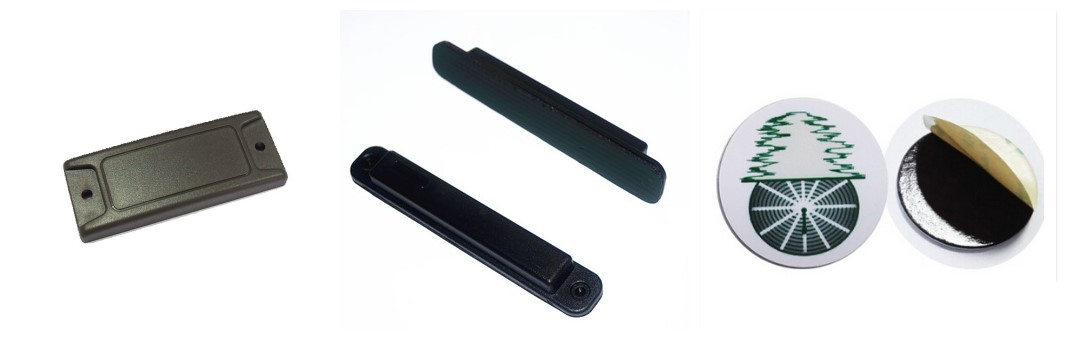
The main type of UHF anti-metal electronic tags?
Speaking of common anti-metal labels, there are mainly ABS, PCB, Epoxy, ceramic, foam, flexible metal-resistant electronic labels, and can be made into various styles and shapes, such as strips, squares, and circles. . Anti-metal tags are widely used in power asset management, enterprise asset management, equipment management, field management of dangerous goods management, pallet management in logistics, asset tracking, metal shelf management, etc.
UHF anti-metal electronic development trend
In general, the development of UHF anti-metal tags currently presents three distinct trends: size miniaturization, structural flexibility, and low cost.
1, size miniaturization
With the development of intelligent manufacturing and smart medical care, the market is increasingly demanding high-performance miniaturized anti-metal tags, which are suitable for the integrated management, identification and traceability of small and micro-metal devices, such as medical devices, metal tools, and aviation. Aerospace, etc.
2, structural flexibility
The flexible structure of the metal-resistant label not only bends, but also adapts to more angle and surface applications. Combined with the characteristics of the TD chip and the changes in the structure, the tamper function can also be realized, which makes up for the shortage of the hard label and expands the application space.
3, low cost
The use of flexible metal-resistant raw materials is relatively low cost, and can be rolled to mass production, which directly reduces the difficulty of personalization and quality inspection, and the cost can be greatly reduced.





 IPv6 network supported