Leave A Message
If you are interested in our products and want to know more details,please leave a message here,we will reply you as soon as we can.

Libraries manage large collections of books, journals, and media items while serving many users every day. As collections grow and user expectations increase, libraries need more efficient tools for inventory control, circulation, and security. RFID technology provides an effective solution for modern library management. By attaching RFID tags to books and using readers at service points, libraries can automate borrowing, returning, and inventory processes.
Challenges in Traditional Library Management
Managing thousands or even millions of items can be complex. Without automated identification systems, libraries face several operational challenges that affect both staff efficiency and user experience.
Slow check-in and check-out processes
Barcode systems require each book to be scanned individually. When multiple users are waiting at the counter, the process becomes slow and inefficient. RFID systems allow multiple books to be read at the same time, which greatly speeds up borrowing and returning operations.
Time-consuming inventory checks
Regular inventory checks are necessary to verify that books are correctly placed on shelves. With barcode systems, staff must remove each book and scan it manually. RFID handheld readers can scan books directly on the shelf, allowing staff to perform inventory audits much faster.
Misplaced or lost items
Books are sometimes placed on the wrong shelves or moved to different sections. When this happens, they become difficult to locate. RFID tracking makes it easier to identify misplaced items because readers can detect tags nearby and guide staff to the correct location.
Security and theft prevention
Libraries need reliable methods to prevent unauthorized removal of books. Traditional security strips may not always provide detailed tracking. RFID security gates can detect tagged items leaving the library without proper checkout, helping improve collection protection.
How RFID Works in Library Systems
RFID library systems use tags attached to books together with readers, antennas, and management software. Each RFID tag contains a unique identifier linked to the item in the library database.
Tagging library items
Small RFID labels are placed inside books or on media items. These labels store identification data that allows the system to recognize each item automatically. Because the tags are thin and flexible, they can be easily integrated without affecting the book’s appearance.
Automated circulation
When books are placed on an RFID reader at a circulation desk or self-service kiosk, the system reads the tags instantly and updates the database. This allows users to check out or return several books at the same time.
Inventory and shelf management
Handheld RFID readers can scan books on shelves without removing them. Staff can quickly identify missing or misplaced items and update inventory records in real time.

Typical RFID Applications in Libraries
RFID technology supports multiple functions across library operations. These applications work together to improve efficiency and user experience.
Self-service borrowing and returning
Self-check kiosks allow users to borrow and return books independently. By placing books on the reader surface, the system automatically identifies the items and updates the account. This reduces queues at service counters and allows staff to focus on assistance and support.
Fast inventory management
Library staff can use handheld RFID readers to scan entire shelves within minutes. The reader detects tags automatically and compares them with the database. This makes regular inventory checks faster and more accurate.
Book sorting and logistics
Large libraries sometimes use automated sorting systems. RFID tags allow books to be identified quickly and directed to the correct return bin or section. This reduces manual sorting work and improves efficiency.
Security and exit monitoring
RFID security gates installed at library exits detect books that have not been properly checked out. If a tagged item passes through the gate without authorization, the system triggers an alert. This helps protect valuable collections while maintaining a convenient user experience.
Recommended RFID Tags for Library Management
Libraries require reliable and durable RFID tags that can be attached to books and media items. The right tag should provide stable reading performance while remaining unobtrusive.
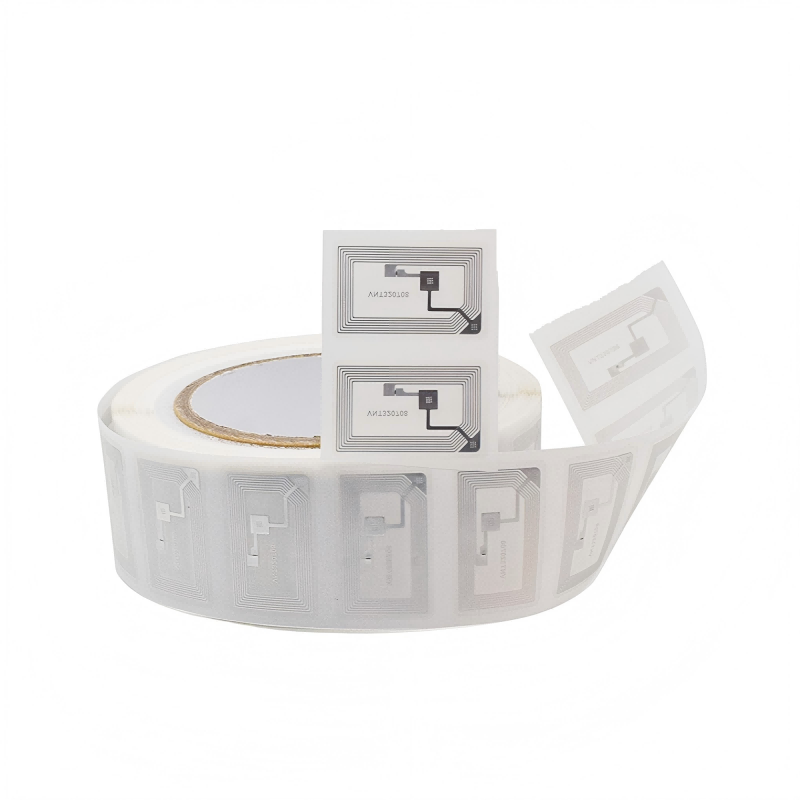
RFID library labels are specially designed for books and printed materials. These labels are thin, flexible, and easy to place inside the book cover. They provide reliable reading performance while remaining almost invisible to users.
High-frequency RFID labels are widely used in library systems because they support short-range identification and secure data storage. HF technology is compatible with most library readers and allows accurate identification of books during circulation and inventory processes.
NFC tags are a type of HF RFID that can interact with smartphones and modern readers. Some libraries use NFC to support mobile applications or smart library services. This allows users to access additional information or interact with digital services.
Libraries often manage CDs, DVDs, and other media items. Durable RFID tags designed for these materials provide reliable performance and resist frequent handling. They help ensure consistent identification for non-book items.
How to Choose the Right RFID Tag for Libraries
Selecting the correct RFID tag is important for stable operation and long-term reliability. Libraries should consider several factors when choosing tags for their collections.
Compatibility with library systems
The RFID tag must be compatible with the reader technology used in the library system. Most libraries use HF frequency, so the tags must match this specification.
Tag size and placement
Library tags should be small and flexible so they can be placed inside book covers without affecting usability. Proper placement ensures stable reading performance.
Durability for long-term use
Books may circulate for many years and experience frequent handling. RFID labels must be strong enough to withstand repeated use.
Security and data storage
Some library systems store additional information on the RFID tag. Choosing tags with appropriate memory and security features can improve system performance.

Benefits of RFID in Library Management
RFID technology helps libraries operate more efficiently while improving the experience for users. Automated identification allows faster borrowing and returning, which reduces waiting time and improves service quality. Inventory management becomes significantly easier because staff can scan shelves quickly using handheld readers. This reduces the time required for audits and helps maintain accurate catalog records. RFID also improves collection security by detecting unauthorized removal of books. At the same time, self-service systems give users more flexibility and convenience. As libraries continue to modernize their services, RFID has become an important technology for building efficient and user-friendly library systems.
Conclusion
RFID technology provides a practical and reliable solution for modern library management. By using RFID labels and tags on books and media items, libraries can automate circulation, improve inventory accuracy, and enhance collection security. Different projects may require different types of tags depending on the system design and materials involved. Selecting the right RFID label is essential for stable reading performance and long-term operation.
As an RFID tag manufacturer, we provide various RFID labels and tags suitable for library management systems, helping system integrators and institutions build efficient and reliable smart library solutions.


 IPv6 network supported
Chat NOW
Scan to wechat :

Scan to Whatsapp :

 Product categories