How to Select the Best RFID Wristband for Events, Hotels and Healthcare
September 23, 2026
We have deployed these RFID tags for tracking pallets and cartons in our cross-border logistics operations. The read rate has remained stable even with mixed loading and high-speed conveyor belts. Compared to our previous tags, the false scan rate has been significantly reduced, and it has become much easier for the warehouse team to handle exceptions.
Daniel – Logistics Operations Lead @ International Freight Company
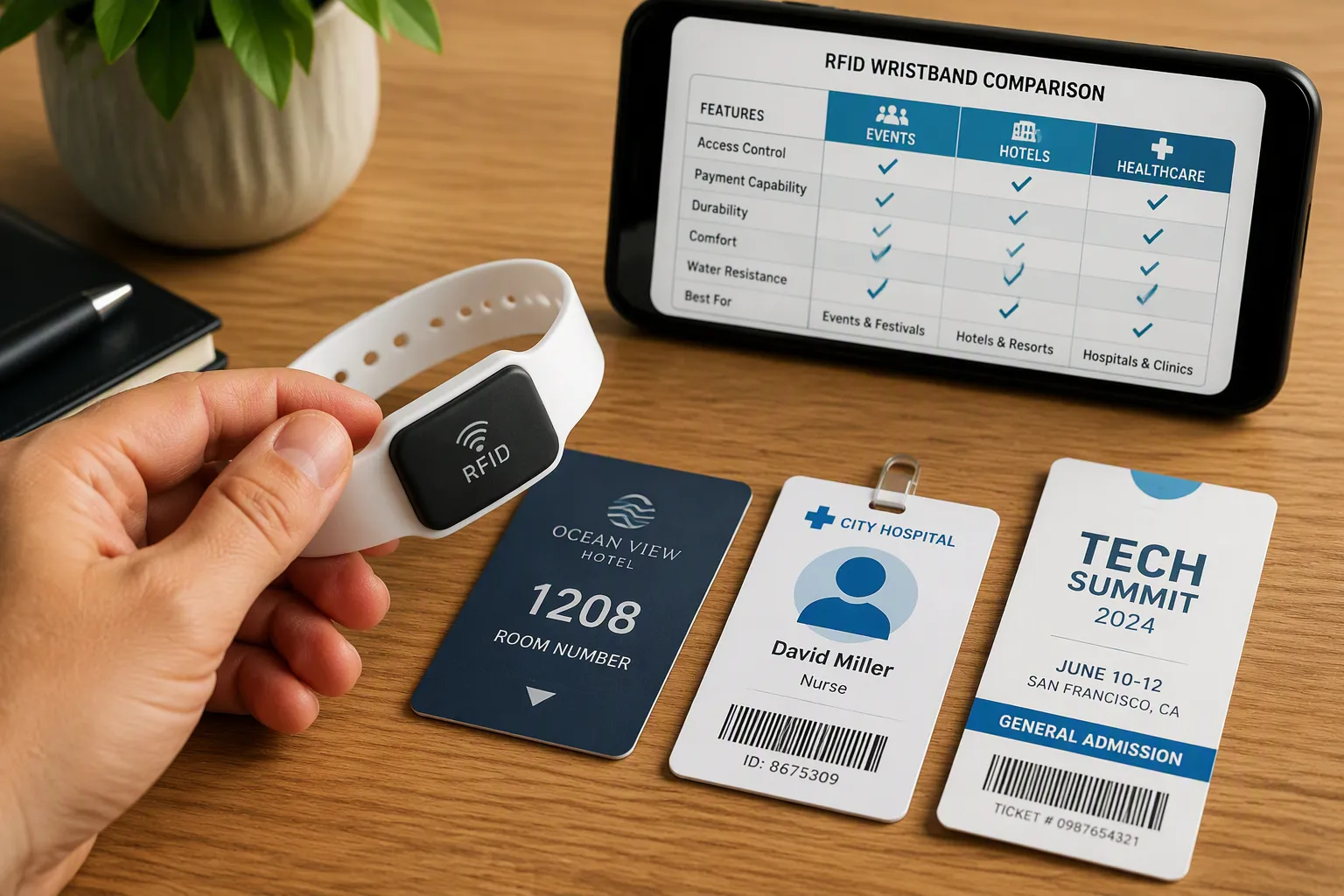
The global RFID wristband market will double from $1 billion in 2023 to $2 billion by 2030, according to HTF Market Insights. You must balance four criteria: durability, comfort, security, and system compatibility. Events demand high-throughput scanning and theft prevention. Hotels need guest comfort and access control integration. Healthcare requires medical-grade hygiene and data accuracy. Evaluate every RFID wristband supplier through this filter. Your final choice becomes a strategic asset, not just a purchase.
Key Takeaways
Choose the right material for your wristband. Silicone works well for water activities and long-term use. Fabric suits single-day events.
Pick a chip that matches your needs. HF chips are good for secure payments and room access. UHF chips are better for tracking many items at once.
Test samples before you buy in bulk. Work with a supplier who offers customization and support. This ensures a smooth deployment.
Event environments push RFID wristbands to their limits. You manage thousands of attendees moving through gates, bars, and VIP zones within minutes. Your wristbands must survive rain, sweat, sunscreen, and constant handling. They must also process payments in under a second and block anyone who tries to cheat the system. The right wristband turns these challenges into operational advantages. The wrong one creates bottlenecks, revenue leaks, and security headaches.
Material for High Throughput and Durability
Your material choice determines how well a wristband performs under heavy use. Two main options dominate the event market: fabric and silicone. Each serves a different operational model.
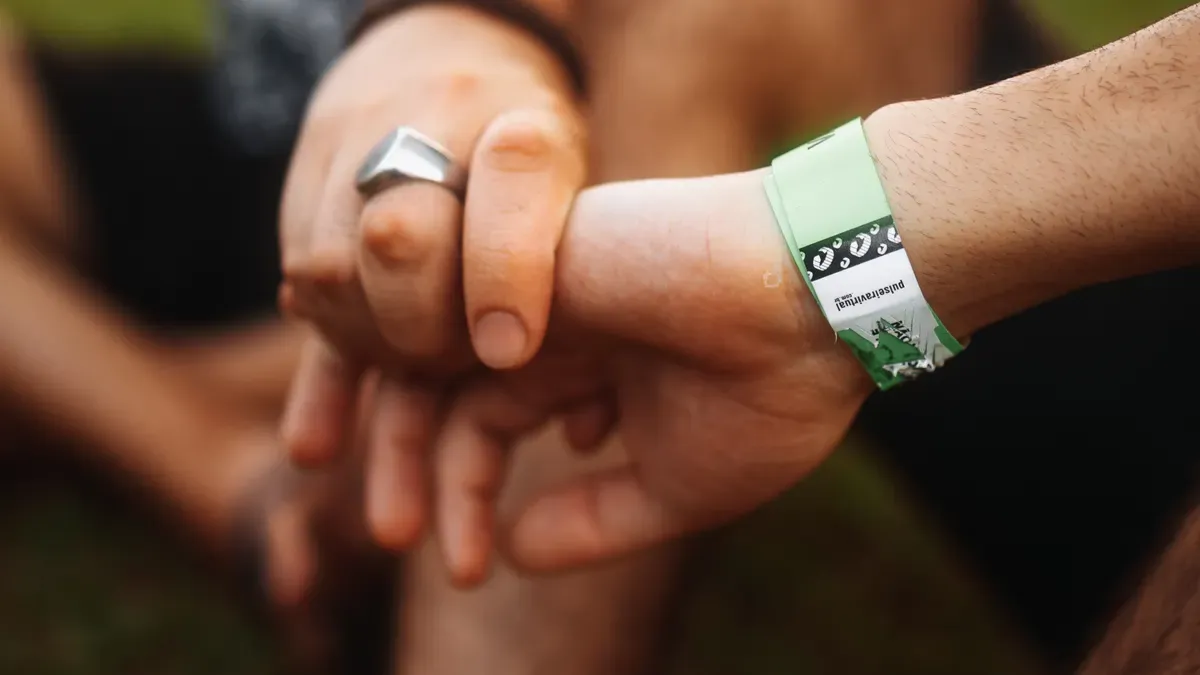
Silicone stands out when your project requires repeated use, water resistance, and daily practicality. It handles constant handling without cracking or stretching. Fabric suits single-use, event-style deployments. It manages light outdoor exposure well. Fabric is not the first choice for continuous water exposure or repeated long-term reuse. PVC appears in some product catalogs, but durability data for event environments remains limited.
Consider your event duration and conditions. A three-day festival with pool parties and rain forecasts demands silicone. A one-day conference with indoor venues can use fabric wristbands effectively. Meihe offers both material options with customization for branding, color, and closure type. This flexibility lets you match the material to your specific event profile.
Chip Type for Fast, Reliable Reads
Chip selection directly affects how fast attendees move through your gates and payment points. Three frequency types serve different purposes.
Choose NFC/HF for tap-based user interaction and secure credentials
Choose UHF (RAIN) for bulk inventory and longer-range automation
Choose LF for short-range stability and special legacy needs
Frequency Type
Operating Range
Typical Read Distance
Data Transfer Speed
Low Frequency (LF)
125–134 kHz
~10–50 cm
Slower data transfer; single-tag reads
High Frequency (HF)
13.56 MHz
~10 cm to 1 m
Stable communication; moderate data rates
Ultra-High Frequency (UHF)
860–960 MHz
Up to several meters (environment-dependent)
Fast data transfer; multi-tag reading
For event access control requiring close-range verification, HF or NFC is typically recommended. LF offers short-range stability for legacy or specialized needs. UHF supports longer read distances and faster multi-tag reading. UHF works better for high-volume environments rather than close-range access control.
Read accuracy in dense attendee environments depends on several factors. RF interference from Wi-Fi, Bluetooth, and nearby readers can disrupt signal integrity. Metal structures reflect RF signals and cause reading errors. Liquids absorb UHF energy, which degrades read range. Dense liquid environments may need HF instead of UHF. Anti-collision protocol tuning matters too. Protocols like Dense Reader Mode must be enabled and calibrated for expected attendee density.
A single UHF reader can complete the energize–power-up–respond–decode cycle for hundreds of tags simultaneously using anti-collision protocols (Dense Reader Mode).
Always test your chosen chip type in the actual deployment environment before large-scale ordering. Meihe provides technical consultation to match chip specifications with your venue layout and throughput requirements.
Security Features for Access Control and Cashless Payments
Security separates a profitable event from a vulnerable one. Events switching to cashless RFID payment systems consistently report meaningful increases in per-attendee spending due to reduced friction. RFID cashless systems eliminate most cash-handling expenses, including armored transport, manual reconciliation labor, register shortages, and staff time for float management and end-of-night counts. RFID access control speeds up admittance and area access, allowing organizers to reduce staffing and security costs.
Metric
Impact Range
Revenue increase
22%–30%
Operational cost reduction
5%–8%
Revenue lost to theft/mishandling
3%–15%
These numbers show why security features deserve serious attention. Modern event-grade RFID chips use encrypted communication protocols that make intercepted data unusable without the correct decryption keys. Cloning requires specialized equipment whose cost significantly exceeds the value of typical event payment accounts. Lost or stolen wristbands can be deactivated instantly, with funds transferred to a replacement.
Several security standards and protocols protect your event payments.
Security Standard / Protocol
Description
AES Encryption
Advanced Encryption Standard transforms sensitive payment data into unreadable formats at multiple transaction points, so intercepted signals remain useless to unauthorized parties.
Dynamic Authentication
Generates unique one-time transaction codes and cryptographic signatures for every payment, preventing replay attacks and cloning.
Tokenization
Replaces sensitive account information with randomly generated tokens that cannot be reverse-engineered or used outside the event environment.
Instant Deactivation
Lost or stolen wristbands can be immediately disabled through the management system to prevent unauthorized usage.
Limited Read Range
A 2–4 inch operational range prevents unauthorized scanning and makes skimming attacks practically impossible.
Tamper-Resistant Hardware
RFID tags include physical security features that make duplication or modification extremely difficult.
Real-Time Fraud Monitoring
Backend systems continuously analyze transaction patterns to identify and flag suspicious activity for investigation.
Operational Security Protocols
Regular system monitoring, incident response procedures, staff access controls, data handling procedures, and coordination with financial institutions for fraud prevention.
Authentication protocols add another layer of protection. Mutual authentication ensures both the wristband and reader verify each other before any data exchange. Cryptographic keys and encryption, such as AES-256, prevent attackers from intercepting or cloning credential information. Unique identifiers give each wristband a credential that cannot be easily duplicated. Multi-factor authentication pairs RFID with additional factors like a PIN or biometric for high-value transactions.
Authentication Protocol / Feature
Description from Source
Effectiveness for Cashless RFID Wristband Payments
Mutual Authentication
"Security Level: High security with mutual authentication and cryptographic protections that prevent cloning or eavesdropping, making it suitable for sensitive transactions."
Directly ensures both the wristband and reader verify each other, preventing fraudulent use of cloned tags in payment scenarios.
Cryptographic Keys & Encryption (e.g., AES-256)
"Modern encryption standards, such as AES-256, prevent attackers from intercepting or cloning credential information." and "The system employs cryptographic protocols that verify both the tag and the reader before granting access."
Encrypts transaction data between wristband and reader, protecting against eavesdropping and replay attacks. AES-256 is industry-standard for secure payments.
Unique Identifiers
"RFID authentication uses advanced encryption and unique identifiers to create robust security barriers. Each tag contains credentials that cannot be easily duplicated or stolen."
Each wristband has a unique ID that cannot be easily duplicated, preventing unauthorized users from making payments with a copied credential.
Multi-Factor Authentication (MFA)
"Combine RFID with Multi-Factor Authentication for Enhanced Security. Pairing RFID badges with additional authentication factors creates multiple layers of security... This layered approach ensures that stolen badges alone cannot compromise your facilities."
For high-value or high-risk payments, adding a PIN or biometric (e.g., fingerprint) on the wristband ensures that even if the RFID tag is stolen, the payment cannot be authorized without the extra factor.
Chip selection affects your security posture. MIFARE Classic chips work for multi-day festivals, camping events, conference series, basic cashless payments, and access zoning. The Crypto-1 protocol is breakable, but the cost-to-clone ratio remains too high for opportunistic fraud at most events. Successful attacks still require technical skill and physical proximity. MIFARE DESFire chips suit high-profile corporate events and resort-style use where a wristband acts as hotel room key, payment token, and access credential. These chips offer tamper-resistance at the silicon level. Each application is firewalled. Mutual authentication ensures chip and reader verify each other before data exchange. This makes relay attacks and data sniffing significantly harder. DESFire carries Common Criteria EAL4+ certification for bank-grade payments or government-issued credentials.
Meihe supplies wristbands with both MIFARE Classic and MIFARE DESFire chip options. The company also provides backend integration support to help you configure encryption, tokenization, and deactivation protocols correctly from day one.
Hotel environments demand a different balance of wristband features than events. Your guests wear wristbands for days, not hours. They expect comfort during sleep, showering, swimming, and dining. They also expect the wristband to open their room, pay for drinks, and grant spa access without friction. A failed wristband creates a front-desk complaint. A cloned wristband creates a security incident. You must evaluate materials, chips, and features through the lens of guest experience and operational reliability.
Material for Guest Comfort and Brand Image
Material selection for hotels starts with wearability. Your guests wear these wristbands 24/7 for the length of their stay. Comfort is not optional. It directly affects satisfaction scores and repeat bookings.
Fabric and silicone represent the two dominant material choices for hotel wristbands. Each offers distinct advantages and trade-offs for extended wear.
Aspect
Fabric
Silicone
Pros
Exceptionally soft, breathable, lightweight; feels like natural textile; suitable for multi-day wear in dry, temperate environments.
Smooth, flexible, conforms to wrist; non-porous surface does not absorb sweat, stays feeling clean.
Cons
Can absorb sweat and odors over time; may become uncomfortable during high-energy activities; poorly finished stitching can feel rough.
Can feel slightly sticky or warm in hot, humid conditions due to lack of breathability; constant snug fit may feel restrictive over long periods.
Your property's environment defines the right choice. A luxury resort with a spa and multiple pools requires a single credential for room access, cashless payment, and pool entry. Fabric bands degrade quickly due to chlorine, saltwater, and oils. Silicone RFID wristbands are completely waterproof and chemically resistant. They guarantee reliable performance throughout the guest's stay regardless of water or chemical exposure.
Material failures in hotel environments follow predictable patterns. Bands rarely break mid-strap. They fail at the post hole when guests force the closure at an angle. They also fail at the shoulder where the face meets the strap under a hard pull. Chlorinated water at operating concentrations does not harm silicone material itself. Residue and abrasion dull the surface where it drags on slide walls. This creates a cosmetic issue rather than a functional one, but it remains expected on seasonal bands. Print durability matters for branded credentials. Debossed marks remain readable after months of wear. Printed marks stay legible only for weeks before becoming patchy, which looks worse than having no mark on a paid admission credential.
Brand image extends beyond durability. Elastic RFID wristbands are increasingly chosen by modern resorts because they serve as a strong branding tool. Resorts can customize colors, logos, and designs to match their property identity, creating a premium guest experience. This trend is no longer just a trend but a new standard for guest-friendly and operationally efficient solutions.
Customization options for hotel wristbands cover both aesthetics and function. You can add barcodes, embossed or debossed text, laser printing, unique QR codes, and serial numbers. Material choices include bamboo, cotton, silicone, woven paper, plastic, vinyl, and fabric. Customization also covers loyalty and VIP program integration, supporting your marketing strategies. RFID wristbands for hotels and resorts can be made from a range of materials such as silicone, fabric, plastic, and vinyl, with waterproof options ideal for aquatic environments. These wristbands are fully customizable with hotel logos, colors, and messaging, allowing properties to align the wristband design with their brand identity and improve guest experience.
Meihe offers extensive customization options for hotel wristbands, including material selection, color matching, logo application, and closure type. The company works with properties to create wristbands that reflect brand identity while meeting operational demands.
Chip Type for Seamless System Integration
Chip selection determines how well your wristbands integrate with existing hotel systems. You likely already have door locks, point-of-sale terminals, and property management software in place. Your wristband chips must communicate with these systems reliably.
HF RFID systems often operate at 13.56 MHz and are very common in electronic locks, hotel cards, office access systems, and smart cards. They provide reliable short-range communication and support higher data capacity and better security features. This frequency dominates the hotel industry for good reason. It balances read range, security, and compatibility with existing infrastructure.
UHF RFID supports longer read ranges and is commonly used in asset tracking, logistics, and vehicle access applications rather than close-range door locking. It is less common for standard door locks but useful in specialized gate and facility access systems. You might consider UHF for parking garages or perimeter gates, but HF remains the standard for room access.
Frequency Type
Operating Range
Typical Read Distance
Data Transfer Speed
Low Frequency (LF)
125–134 kHz
~10–50 cm
Slower data transfer; single-tag reads
High Frequency (HF)
13.56 MHz
~10 cm to 1 m
Stable communication; moderate data rates
Ultra-High Frequency (UHF)
860–960 MHz
Up to several meters (environment-dependent)
Fast data transfer; multi-tag reading
Integration with property management systems requires more than frequency matching. You must verify that your chosen chip supports the authentication protocols your locks and payment terminals expect. MIFARE DESFire chips offer tamper-resistance at the silicon level. Each application is firewalled. Mutual authentication ensures chip and reader verify each other before data exchange. This makes relay attacks and data sniffing significantly harder. DESFire carries Common Criteria EAL4+ certification for bank-grade payments or government-issued credentials.
Legacy systems create integration challenges. Many hotel deployments still depend on legacy UID-based authentication. Even if the lock itself is secure, the credential can be cloned. When a wristband can be cloned, shared, or replayed, the issue shifts from a technical glitch to a guest safety concern, an audit problem, and potentially an insurance liability. You should upgrade to chips with dynamic authentication and encryption to close this gap.
Meihe provides technical consultation to match chip specifications with your existing hotel infrastructure. The company supplies wristbands with both MIFARE Classic and MIFARE DESFire chip options and offers backend integration support to help you configure encryption, tokenization, and deactivation protocols correctly from day one.
Features for Pool, Spa, and Room Access
Hotel wristbands must perform across diverse environments within a single property. A guest moves from their room to the pool to the spa to the restaurant without changing credentials. Your wristband must handle all these transitions seamlessly.
Water resistance is non-negotiable for properties with pools and spas. The IP rating system defines how well a wristband withstands water exposure.
IP Rating
Meaning (paraphrased)
Relevance to Query
IP67
Protection against temporary immersion (up to 1 m for 30 min)
Not sufficient for prolonged pool/spa use.
IP68
Protection against continuous submersion beyond 1 m
Required for extended immersion in hotels.
Different areas of your property demand different protection levels. Gate readers require a minimum of IP65 for splash-proof protection against low-pressure water jets, suitable for above-water use only. Submerged installations require a minimum of IP68, designed for continuous immersion that withstands chlorinated and salt water without signal degradation. Fully submersible wristbands need IP68-equivalent encapsulation to ensure protection during prolonged pool and spa use.
Security features matter especially in pool and spa areas. Guests frequently swap wristbands between children, leave them behind on lounge chairs, or borrow them specifically for spa access. These behaviors create security gaps that basic RFID systems cannot address. Modern hotel-grade chips use encrypted communication protocols that make intercepted data unusable without the correct decryption keys. Lost or stolen wristbands can be deactivated instantly, with access privileges transferred to a replacement.
Several security standards and protocols protect your hotel operations.
Security Standard / Protocol
Description
AES Encryption
Advanced Encryption Standard transforms sensitive data into unreadable formats at multiple transaction points, so intercepted signals remain useless to unauthorized parties.
Dynamic Authentication
Generates unique one-time transaction codes and cryptographic signatures for every transaction, preventing replay attacks and cloning.
Tokenization
Replaces sensitive account information with randomly generated tokens that cannot be reverse-engineered or used outside the hotel environment.
Instant Deactivation
Lost or stolen wristbands can be immediately disabled through the management system to prevent unauthorized usage.
Limited Read Range
A 2–4 inch operational range prevents unauthorized scanning and makes skimming attacks practically impossible.
Tamper-Resistant Hardware
RFID tags include physical security features that make duplication or modification extremely difficult.
Real-Time Fraud Monitoring
Backend systems continuously analyze transaction patterns to identify and flag suspicious activity for investigation.
Authentication protocols add another layer of protection. Mutual authentication ensures both the wristband and reader verify each other before any data exchange. Cryptographic keys and encryption, such as AES-256, prevent attackers from intercepting or cloning credential information. Unique identifiers give each wristband a credential that cannot be easily duplicated. Multi-factor authentication pairs RFID with additional factors like a PIN or biometric for high-value transactions.
Meihe supplies hotel wristbands with the full range of security features your property requires. The company offers IP68-rated silicone wristbands for pool and spa environments, along with MIFARE DESFire chips for secure room access and cashless payments. Meihe also provides customization for branding, color, and closure type to match your property's identity.
Selecting RFID Wristbands for Healthcare
Healthcare environments demand strict standards for patient-worn devices. Your wristband must resist bodily fluids, disinfectants, and constant wear without compromising safety. The wrong choice creates identification errors and regulatory compliance risks.
Material for Hygiene and Patient Safety
Patient safety starts with your material selection. Your wristband must be hypoallergenic, waterproof, and durable for the entire patient stay. PVC and silicone offer the best performance in healthcare settings. These materials resist alcohols, sanitizers, and frequent cleaning without degrading. Tamper-evident closures provide an additional safety layer. They delaminate or show VOID patterns on removal attempts, preventing wristband swapping and supporting infant security protocols. One-time fastening with breakaway options works well for behavioral health and pediatrics. You must ensure no exposed metal parts exist on any patient wristband.
Chip Type for Data Accuracy and Tracking
Chip selection directly affects patient tracking accuracy and medical equipment interference. Two frequency types dominate healthcare deployments.
Dimension
HF RFID (13.56 MHz)
UHF RFID (860–960 MHz)
Read range
Up to ~5–10 cm
Up to ~10–12 m
Read accuracy
Very precise, controlled zone
High throughput but orientation issues
Interference with metals/liquids
Less susceptible at short range
Metals reflect, liquids absorb
Security
Robust encryption and authentication
Limited encryption
Best use
Patient wristbands, medication tracking
Equipment tracking, laundry
HF RFID suits patient wristbands because its short range prevents accidental reads of neighboring tags. UHF works better for tracking medical equipment at distance. UHF faces interference challenges near the human body. HF magnetic coupling makes it more forgiving in clinical environments.
UHF is better for automation and distance but can face interference and privacy challenges. HF is better for security and precision, requiring close proximity but offering controlled reads for patient-level identification.
Features for Patient Identification and Workflow
A Joint Commission study confirms misidentification contributes significantly to sentinel events in hospitals. Your wristband system must prevent these errors. Critical features include:
Tamper-evident closures showing visible signs of removal
Print surfaces engineered for crisp barcodes that resist abrasion and sanitizers
Redundancy combining human-readable text, 1D/2D barcodes, and RFID
Crypto-enabled chips supporting AES-128 Encryption and Mutual Authentication
Write tokens, not PHI, to the chip and lock memory blocks after encoding
RFID wristbands offer contactless reading that works when wet, creased, or scratched. Barcode-only bands become unreadable under these conditions. The encrypted UID on your wristband links to the backend database without storing any protected health information on the chip itself. This design meets regulatory requirements while enabling seamless EMR integration.
Meihe supplies healthcare-grade wristbands with PVC and silicone material options, tamper-evident closures, and crypto-enabled chips. The company helps you configure the right combination of barcode backup and encryption protocols for your facility.
Working with the Right RFID Wristband Supplier
Choosing the right partner transforms your wristband deployment from a simple purchase into a strategic advantage. The wrong supplier can cause integration headaches, product failures, and support delays. The right RFID wristband supplier ensures seamless operation from day one.
Evaluating Supplier Expertise and Support
Start by examining quality systems. Look for ISO 9001 certifications. These indicate disciplined processes. Check product compliance with CE, FCC, and RoHS standards. An experienced RFID wristband supplier should demonstrate years of specialization in your industry. Assess technical support quality through direct communication. Request client references and case studies to verify reliable performance. Always insist on testing samples under real conditions. Remember, total value outweighs the lowest price.
Beyond these criteria, ask specific questions about after-sales service. The following table outlines key areas to verify with any prospective partner.
Question Area
Key Questions to Ask
Why It Matters
Warranty Coverage
What does the warranty cover? How long does it last?
Clarifies protection scope and supplier confidence.
Defect and Failure Handling
How do I report defects or premature failures?
Reveals responsiveness and willingness to take responsibility.
Replacement and Return Policies
What are the return policies? Who bears shipping costs?
Prevents disputes and ensures clear recourse.
Technical Support and Guidance
Do you provide integration help or troubleshooting?
Valuable for successful deployment.
Reorder Consistency
Can you maintain same specifications on repeat orders?
Ensures uniformity across deployments.
Communication and Responsiveness
How quickly do you respond to inquiries?
Indicates after-sales support quality.
Evaluating these areas helps you find a reliable RFID wristband supplier that matches your operational needs.
The Meihe Advantage: Quality, Customization, and Reliability
Meihe stands out as a partner that meets every criterion. The company holds ISO 9001 certification and ensures all products comply with international standards. Meihe's team brings deep specialization across events, hotels, and healthcare. You receive hands-on technical guidance from initial consultation through deployment. Sample testing comes standard. Meihe maintains consistent specifications across reorders, so you never worry about variation.
Customization defines Meihe's approach. You choose materials, colors, logos, closures, and chip types — from MIFARE Classic to MIFARE DESFire.Meihe also provides backend integration support for encryption, tokenization, and system compatibility. This combination makes Meihe a trusted RFID wristband supplier for any sector.
Durability, comfort, security, and compatibility guide every sector differently. Define your demands, choose materials and chips wisely, confirm security features, verify system compatibility, and partner with a reputable RFID Wristband Supplier like Meihe. Always test samples under real-world conditions before bulk purchasing.
Choose a material suitable for the expected water level: silicone or PVC for submersion, vinyl or Tyvek for rain.
FAQ
Which RFID wristband material suits your event best?
Choose silicone for multi-day festivals with water activities. Pick fabric for single-day indoor conferences. Meihe offers both options with custom branding.
How do you pick the right RFID chip for hotels?
Select HF chips at 13.56 MHz for room locks and payment terminals. This frequency integrates with most hotel systems seamlessly.
What security features matter most for healthcare wristbands?
You need tamper-evident closures, AES-128 encryption, and mutual authentication. These features prevent patient misidentification and protect sensitive data.






 IPv6 network supported