Leave A Message
If you are interested in our products and want to know more details,please leave a message here,we will reply you as soon as we can.

What Is a Digital Product Passport?
A Digital Product Passport (DPP) is a digital record that stores key information about a product throughout its lifecycle. It connects a physical item to data such as materials, origin, compliance, repair history, and recycling instructions. Digital Product Passports are being promoted by new regulations, especially in the European Union, to support sustainability, transparency, and the circular economy.
To make DPP work in real supply chains, each product must have a unique identity. This is achieved using technologies like RFID and NFC tags.
Why Product Traceability Matters
Product traceability is important for:
• Regulatory compliance
• Anti-counterfeiting
• Sustainability tracking
• Inventory management
• Warranty & service history
Industries such as electronics, batteries, automotive, and textiles are already required to provide more product data, making Digital Product Passports essential.
How RFID Enables Digital Product Passports
RFID (Radio Frequency Identification) allows automatic identification of products using radio signals.
Each RFID tag has a unique ID linked to the Digital Product Passport stored in a database.
Benefits of RFID for DPP
• No line-of-sight scanning
• Fast bulk reading
• Long reading distance
• Durable for industry use
• Unique ID for each product
RFID is widely used in:
• Warehousing
• Manufacturing
• Apparel tracking
• Automotive parts
• Battery passport systems
RFID is ideal for supply chain traceability.
How NFC Enables Consumer-Level Product Passports
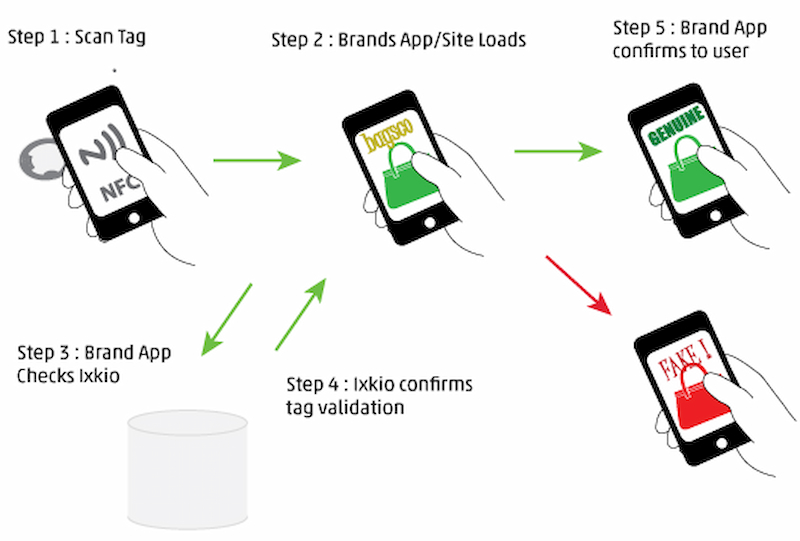
NFC (Near Field Communication) is a short-range wireless technology supported by smartphones.
Users can tap a product to access its Digital Product Passport.
Benefits of NFC
• Works with mobile phones
• High security
• Ideal for authentication
• Enables customer interaction
• Supports digital manuals & warranty
Common NFC DPP uses:
• Luxury goods authentication
• Electronics support info
• Smart packaging
• Product verification
NFC is best for consumer interaction and anti-counterfeiting.
RFID vs NFC in Digital Product Passport Systems
|
Feature |
RFID |
NFC |
|
Range |
Long |
Short |
|
Bulk reading |
Yes |
No |
|
Phone compatible |
No |
Yes |
|
Security |
Medium |
High |
|
Best use |
Logistics |
Consumer access |
Most Digital Product Passport systems use both:
• RFID for tracking
• NFC for user access
Conclusion
Digital Product Passports are becoming essential for modern supply chains and sustainability regulations. RFID and NFC technologies make it possible to connect physical products with digital data, enabling full lifecycle traceability. Companies adopting DPP with RFID and NFC will be ready for future regulations and smarter supply chains.


 IPv6 network supported
Chat NOW
Scan to wechat :

Scan to Whatsapp :

 Product categories