Why Businesses Are Replacing Traditional ID Cards with RFID Smart Cards
October 14, 2026
We have deployed these RFID tags for tracking pallets and cartons in our cross-border logistics operations. The read rate has remained stable even with mixed loading and high-speed conveyor belts. Compared to our previous tags, the false scan rate has been significantly reduced, and it has become much easier for the warehouse team to handle exceptions.
Daniel – Logistics Operations Lead @ International Freight Company
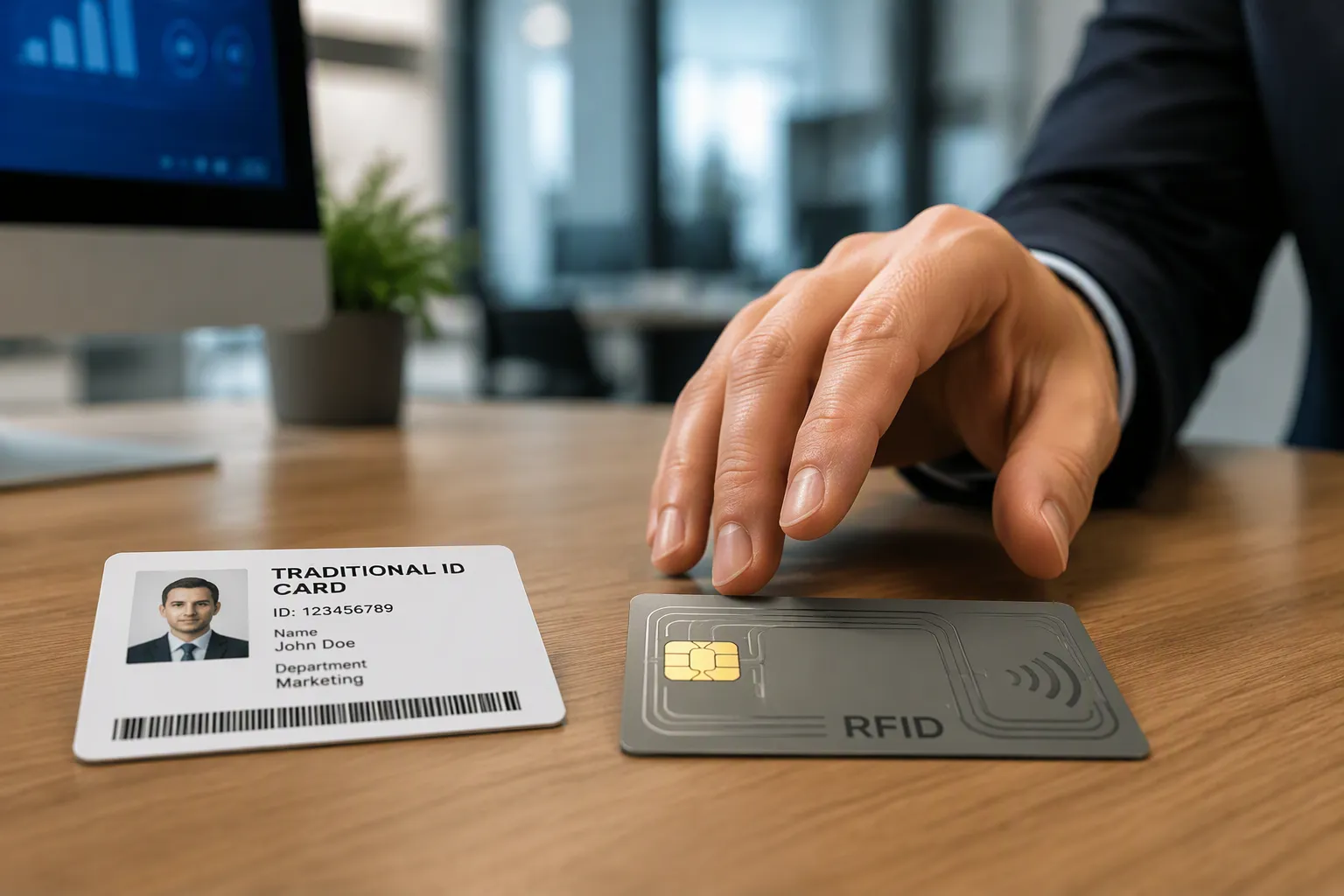
Traditional ID cards break, get lost, and clone easily, so you face constant security gaps and administrative headaches. An RFID Identification Card from Meihe encrypts your data, reads contactlessly, and survives heavy daily use. You gain stronger security, faster operations, and lower costs.
Key Takeaways
RFID smart cards keep your data safe with strong encryption. They are very hard to copy.
These cards work fast and save money. You can track attendance and assets easily.
RFID cards last many years. You save on replacements and see a quick return on investment.
Enhanced Security and the RFID Identification Card Advantage
Security stands as the top reason businesses abandon traditional ID cards. Magnetic stripe cards store static, unencrypted data. Cheap skimming devices clone them in seconds. Modern encrypted RFID smart cards use strong cryptography and mutual authentication between card and reader. Cloning becomes significantly more difficult because capturing the raw signal does not yield the cryptographic keys needed to generate valid responses. This fundamental difference explains why the RFID Identification Card from Meihe delivers protection that legacy cards simply cannot match.
Encryption That Protects Data
Encryption transforms your card data into unreadable ciphertext. Without the correct key, intercepted signals mean nothing to an attacker. The specific encryption standard varies by technology and manufacturer. Some cards rely solely on static UIDs, which are insecure. Others implement AES, DES, or proprietary encryption schemes to protect their data. Weak or nonexistent encryption appears in UID-based systems such as HID Prox (125 kHz) and MIFARE Classic (13.56 MHz), which transmit data in plaintext. More secure cards like MIFARE DESFire EV1/EV2 and HID iCLASS SE use symmetric encryption, specifically AES-128 or DES/3DES, to protect data and authenticate communication using session keys that change with each transaction. Some systems also employ mutual authentication and secure key exchange using Elliptic Curve Cryptography (ECC) or Diffie-Hellman key exchange for secure session establishment.
Common encryption standards in RFID access control include:
3DES
AES
3K3DES
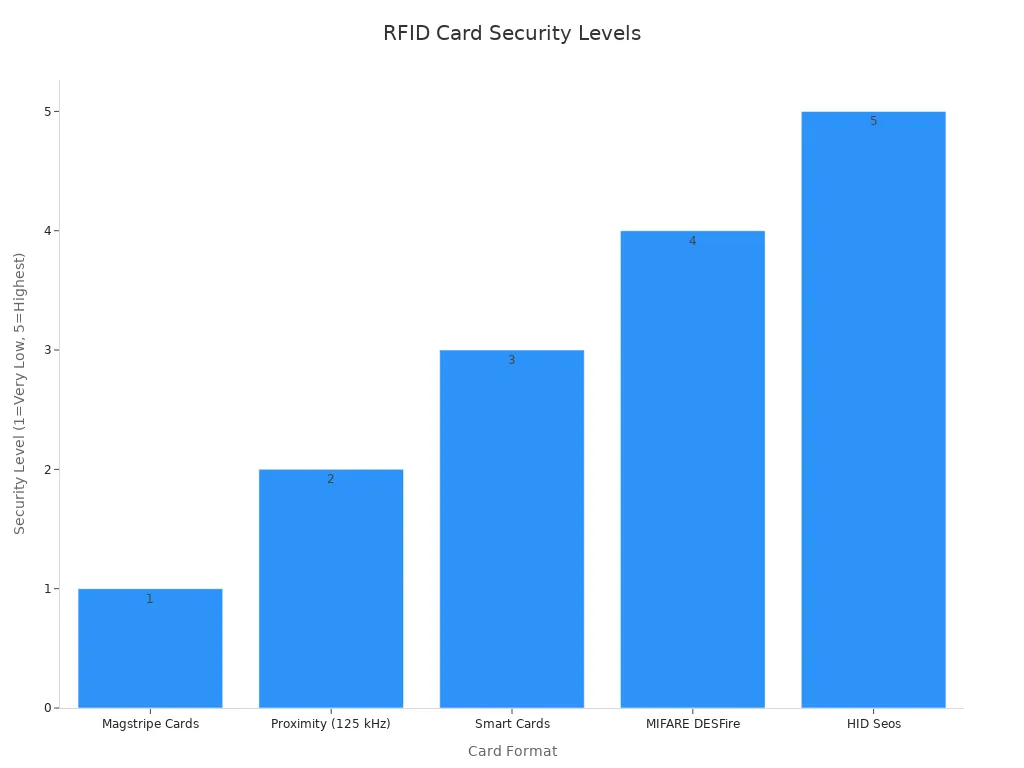
The table below compares card formats by their encryption capabilities and overall security level.
Card Format
Encryption
Security Level
Proximity (125 kHz)
No
Low
Smart Cards
Yes
High
MIFARE DESFire
Yes (AES)
Very High
Magstripe Cards
No
Very Low
HID Seos
Yes
Highest
Different encryption standards serve different purposes. The next table breaks down each standard by description and the card types that use it.
Encryption Standard
Description
Card Types Using It
DES (Data Encryption Standard)
Legacy encryption standard, vulnerable to attacks
Used in legacy systems
AES (Advanced Encryption Standard)
Highly secure, modern encryption
MIFARE DESFire (EV1/EV2/EV3), HID iCLASS SE, HID SEOS
DES/3DES
Symmetric encryption
MIFARE DESFire, HID iCLASS SE
Proprietary Encryption
Manufacturer-specific encryption for added security
HID, LEGIC cards
64-bit Cryptography
Weak cryptography (compromised)
Original HID iCLASS standard cards
AES-128
Advanced encryption with 128-bit keys
MIFARE DESFire EV3, HID SEOS, CPU cards
Multi-layer Encryption
Multiple encryption layers for enhanced security
MIFARE DESFire EV3, CPU cards
Meihe builds its RFID Identification Card with AES-128 encryption and multi-layer protection. You get the same security architecture trusted by major manufacturers, without the premium price tag.
Tamper-Proof Design
Physical durability matters as much as digital security. Traditional PVC cards crack, delaminate, and wear out. The magnetic stripe degrades with every swipe. An RFID smart card from Meihe uses robust materials and sealed chip technology. The card survives drops, moisture, and temperature swings. Tampering attempts trigger built-in protections. The chip locks itself after repeated failed authentication attempts. This design prevents brute-force attacks at the physical layer.
Mutual authentication adds another layer of defense. Both the card and the reader verify each other before any data exchange occurs. This two-way verification prevents unauthorized readers from extracting card data. It also stops cloned cards from communicating with legitimate readers.
Security Mechanism
How It Prevents Unauthorized Access
Mutual authentication with cryptographic protections
Prevents cloning and eavesdropping, making the system suitable for sensitive transactions
Cryptographic protocols verifying both tag and reader before granting access
Significantly reduces unauthorized access attempts while maintaining audit trails for compliance monitoring
You gain peace of mind knowing that a lost card does not become a security breach. The encryption keys stay protected. The mutual authentication handshake fails. The system denies access automatically.
Granular Access Control
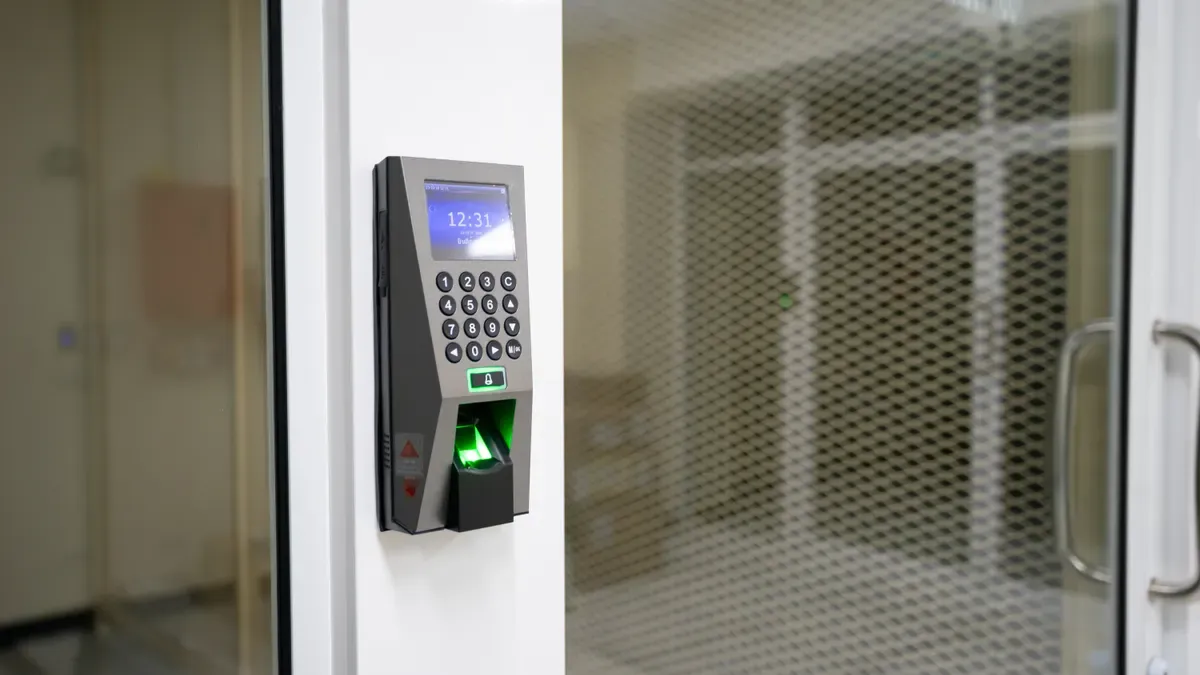
Not every employee needs access to every door. Granular access control lets you define exactly who goes where and when. RFID systems enable time-based and zone-based permissions with precision that traditional cards cannot achieve.
Time-based permissions restrict access by schedule. Shift workers might have access valid only from 6 AM to 6 PM on weekdays. Security personnel receive 24/7 access across all zones. Temporary visitors get a credential with a hard expiration date that locks out automatically. You set these rules once, and the system enforces them without manual intervention.
Zone-based permissions work by assigning separate profiles for each role. A floor operator's credential might grant access to the production area but not to the tool crib, quality lab, or executive offices. This approach enforces a least-privilege model. Employees access only what their role requires. You reduce insider threat risks and simplify compliance audits.
The RFID Identification Card from Meihe supports multiple access profiles on a single credential. You manage permissions through your existing software. Changes take effect immediately across all readers. No reissuing cards. No manual lock changes. No administrative backlog.
Operational Efficiency and Cost-Effectiveness
Faster Authentication
Contactless authentication happens in milliseconds. Your RFID Identification Card from Meihe requires no swiping, no PIN entry, and no fumbling with a worn magnetic stripe. You wave the card near the reader. For a 500-employee organization, this speed translates directly into measurable savings. Payroll processing time drops by 50 to 70 percent. Attendance data flows automatically into the system. Employees cannot clock in for absent colleagues. Time theft drops to near zero. Payroll savings from reduced time theft reach 5 to 8 percent annually.
Metric
Value
Annual savings for a 500-employee organization
$50,000–$150,000
Reduction in payroll processing time
50–70%
Payroll savings from reduced time theft
5–8%
Typical ROI period
6–18 months
FoxHR confirms that RFID attendance tracking directly links clock-in data to payroll calculation. This linkage removes the need for expensive attendance machines and reduces unnecessary paperwork. Your administrative team spends less time reconciling timesheets. They dedicate more hours to strategic tasks.
Automated Tracking
RFID systems also automate asset and inventory tracking. Unlike barcodes, RFID does not require line-of-sight scanning. Readers detect tags automatically as items pass through doorways or storage zones. This capability enables real-time visibility into asset locations across your entire facility.
Key functions of an RFID asset tracking system include:
Automatic identification of tagged items without manual scanning
Real-time location tracking of assets
Audit trails for every asset movement
Alerts for unauthorized movement or potential loss
Integration with enterprise systems like ERP and WMS
The software processes tag data, displays dashboards, and generates reports. You gain immediate awareness of asset status and location. Common use cases cover inventory management, goods tracking across supply chains, returnable asset tracking for bins and pallets, and authentication of goods in regulated industries like pharmaceuticals. Cross-docking operations also benefit. RFID reduces misroutes and delays when goods ship immediately upon receipt.
Active RFID tags transmit signals over longer distances. They work better for real-time location tracking. Passive tags respond only when near a reader. For asset tracking that requires continuous location updates, active RFID provides the necessary range.
Long-Term Savings and Durability
The financial case for RFID strengthens over time. An RFID Identification Card from Meihe endures far longer than a traditional magnetic stripe card. Magnetic stripes scratch, demagnetize, and fail after 300 to 1,000 swipes. Their typical lifespan is only 2 to 5 years. RFID smart cards last 5 to 10 years or more. They survive over 100,000 read cycles. The sealed chip inside resists moisture, temperature swings, and physical wear.
Fewer card replacements mean lower material costs and less administrative overhead. You also avoid the security risk of expired or damaged credentials. The typical return on investment for an RFID system is 6 to 18 months. Savings in payroll, reduced theft, and lower card replacement expenses drive this ROI. Annual savings for a 500-employee organization range from $50,000 to $150,000. These numbers make the upgrade financially compelling for businesses of any size.
Integration, Scalability, and Real-World Applications
Compatibility with Existing Systems
You do not need to rip out your current infrastructure to adopt RFID technology. Most access control systems support standard communication protocols that make integration straightforward.
Wiegand protocol remains the standard for legacy RFID integration. It offers simplicity, broad compatibility, and direct interfacing with existing controllers.
OSDP is the modern standard. It supports encrypted communication and device supervision for high-security deployments.
Many systems support both protocols. You can migrate from Wiegand to OSDP in phases without replacing everything at once.
Your existing software often works with new RFID readers. This compatibility reduces installation time and protects your prior investments.
Future-Proofing Your Investment
Scalability separates RFID from traditional ID cards. You start with a few readers and expand across your entire facility. Add new doors, zones, or locations without rebuilding the system. The RFID Identification Card from Meihe supports multiple applications on one credential. You can add payment, time tracking, or building automation later. This flexibility means your initial investment continues delivering value as your business grows.
Case Studies in Healthcare, Corporate Offices, and Education
Healthcare facilities use RFID to track equipment and control access to medication storage. Nurses locate wheelchairs and pumps in seconds. Corporate offices deploy RFID for secure entry, parking, and cafeteria payments. One credential handles everything. Schools use RFID for attendance, library checkout, and campus access. Parents receive real-time notifications when students arrive. Each sector gains faster operations and stronger security with the same core technology.
An RFID Identification Card beats traditional ID cards on every measure: security, efficiency, cost, and scalability. You gain immediate operational benefits and long-term savings. Integration with your existing systems keeps the transition smooth and low-risk. Real-world results prove the investment pays off. This shift is not a trend. It is a strategic upgrade.
FAQ
How much does an RFID smart card system cost compared to traditional ID cards?
Initial hardware costs run higher, but you save $50,000–$150,000 per year on payroll, reduced theft, and fewer card replacements. ROI occurs within 6–18 months.
Can I integrate RFID smart cards with my current access control system?
Yes. Most systems support Wiegand or OSDP protocols. Meihe cards work with your existing readers and software, so you upgrade without replacing infrastructure.
Are RFID smart cards secure enough for sensitive data or high-security areas?
Yes. Meihe cards use AES-128 encryption and mutual authentication. Captured signals remain unreadable, and cloned cards cannot pass verification.





 IPv6 network supported