Leave A Message
If you are interested in our products and want to know more details,please leave a message here,we will reply you as soon as we can.

The global logistics industry is rapidly evolving, driven by the explosive growth of e-commerce and increasing demand for real-time supply chain visibility.
One technology is quickly becoming the backbone of next-generation supply chains: RFID.
In recent years, a clear trend has emerged — logistics operations are moving from pallet-level tracking to item-level and parcel-level visibility.
In this article, we explore how RFID enables item-level tracking and why it is becoming a key technology for the future of logistics.
From Pallet Tracking to Item-Level Visibility
Traditionally, logistics tracking has focused on pallets or cartons rather than individual products. It lacks the precision needed for today’s high-speed distribution systems.
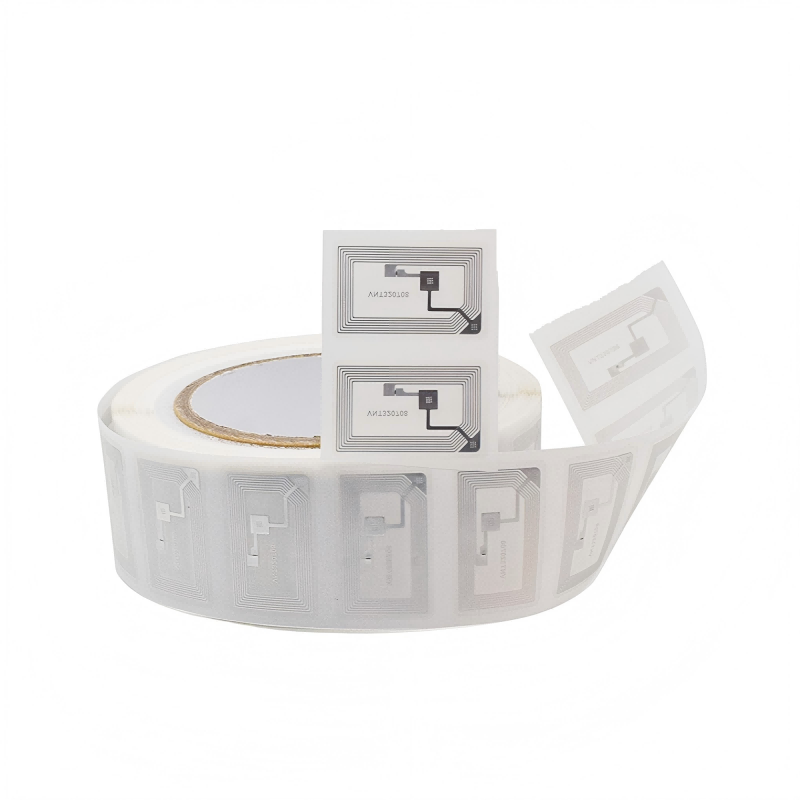
RFID changes this by allowing companies to assign a unique digital identity to each individual item or parcel.
With RFID tags attached to products, warehouses and logistics operators can automatically detect and track items as they move through the supply chain. Instead of manually scanning each barcode, RFID readers can identify hundreds of tagged items simultaneously, providing real-time inventory visibility.
This capability dramatically improves operational efficiency and reduces human error.
Parcel-Level RFID Tracking for E-Commerce Logistics
RFID technology enables automated parcel tracking, which helps logistics companies manage high-volume shipments more efficiently.
By attaching RFID labels or tags to parcels, logistics centers can automatically track packages during key stages such as:
• inbound warehouse receiving
• automated sorting lines
• loading and dispatch
• cross-dock transfers
• final delivery preparation
Unlike traditional barcode systems, RFID does not require direct line-of-sight scanning. Multiple packages can be identified instantly as they pass through RFID reading zones.
RFID-Enabled Smart Warehouses
Modern warehouses are increasingly adopting automation technologies such as conveyor systems, robotics, and intelligent inventory management software.
RFID plays a critical role in these environments by enabling automatic identification and tracking of goods.
RFID readers installed at key checkpoints can instantly detect tagged items moving through the warehouse. This allows warehouse management systems (WMS) to update inventory data automatically.
Typical RFID applications in smart warehouses include:
• automated inbound inventory registration
• real-time location tracking of goods
• automated conveyor sorting
• inventory accuracy verification
• asset tracking for pallets and containers
By integrating RFID with warehouse automation systems, companies can significantly improve operational efficiency while reducing inventory discrepancies.
Achieving Real-Time Supply Chain Visibility
One of the most important advantages of RFID is its ability to provide real-time visibility across the entire supply chain.
From manufacturing facilities to distribution centers and retail stores, RFID technology enables continuous tracking of goods without manual intervention.
This level of visibility allows companies to:
• monitor shipment progress in real time
• identify misplaced inventory quickly
• reduce shipping errors
• improve stock accuracy
• optimize supply chain planning
As global supply chains become more complex, real-time data is becoming essential for efficient logistics management.
RFID provides the digital infrastructure needed to support this transformation.
The Future of RFID in Logistics
As supply chains continue to digitalize, the adoption of RFID technology is expected to accelerate across industries such as:
• e-commerce fulfillment
• retail distribution
• third-party logistics (3PL)
• manufacturing supply chains
• cold chain logistics
The ability to track goods at the item level will become a key competitive advantage for logistics providers.
Companies that invest in RFID today will be better positioned to build transparent, automated, and highly efficient supply chains.
Conclusion
RFID technology is transforming logistics by enabling item-level and parcel-level visibility throughout the supply chain.
Compared with traditional barcode systems, RFID offers faster identification, improved automation, and real-time data access.
As warehouses and logistics networks continue to modernize, RFID will play an increasingly important role in building smarter and more efficient supply chains.
For logistics operators looking to improve accuracy, reduce labor costs, and gain real-time visibility, RFID is no longer just an optional upgrade — it is becoming an essential technology.


 IPv6 network supported
Chat NOW
Scan to wechat :

Scan to Whatsapp :

 Product categories