Leave A Message
If you are interested in our products and want to know more details,please leave a message here,we will reply you as soon as we can.

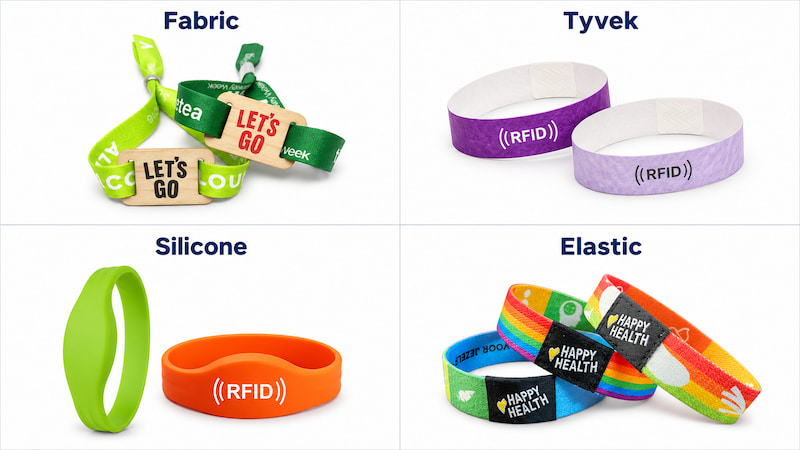
RFID wristbands for events and festivals are wearable credentials that work with compatible readers and software to verify entry, manage access permissions, and support services such as cashless purchases. Common options include fabric, Tyvek, silicone, and elastic wristbands. Choosing the right wristband involves more than selecting a color or printing a logo. Organizers need to match the chip to their system, choose a suitable material and closure, and allow time for sample testing before production. This guide explains the main options and what to confirm before ordering.
How Do RFID Wristbands Work at an Event?
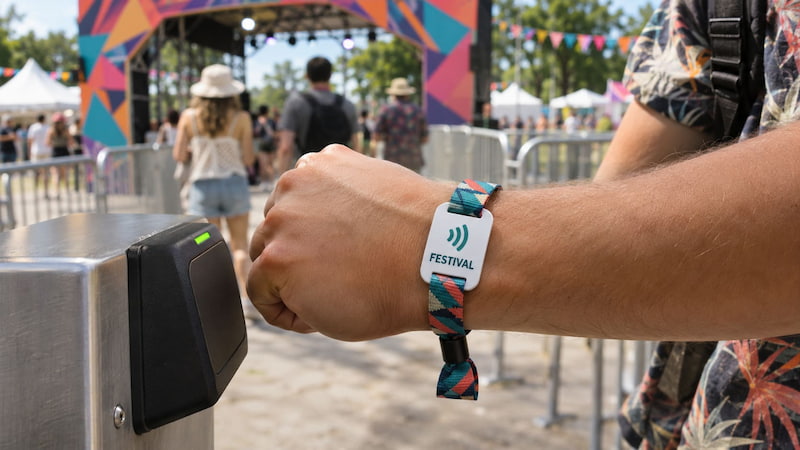
A typical event workflow connects each wristband to a ticket or attendee record, then checks that record when the wristband is read.
Registration: The attendee purchases a ticket or completes registration.
Assignment: The wristband is linked to the relevant ticket, account, or access profile.
Reading: The attendee presents the wristband to a compatible reader.
Verification: The system checks the credential and applicable permissions.
Recording: The system records the entry, redemption, or transaction.
The technical process varies. Some systems use a chip identifier to look up a database record. Others use protected chip data and authentication. Before ordering, ask the system provider which chip, configuration, and encoding process the project requires.
What Can RFID Wristbands Be Used For?
RFID wristbands can support several event functions when integrated with the appropriate equipment and software.
|
Application |
How the wristband is used |
What the system must support |
|
Admission |
Identifies a ticket or attendee record |
Ticket validation and entry rules |
|
Zone access |
Identifies the wearer's access profile |
Permissions for VIP, staff, backstage, or other areas |
|
Cashless purchases |
Identifies an account or payment credential |
Transaction processing, balances, and merchant operations |
|
Brand interaction |
Connects an attendee to content or an activity |
Compatible readers or NFC phones and suitable content |
|
Operational records |
Supplies a credential at a reading point |
Logging and reporting functions |
Entry and Re-entry
A wristband can identify an attendee at the entrance and during subsequent visits. Whether re-entry is permitted depends on the ticket rules and system configuration. RFID can support an efficient admission process, but queue performance also depends on reader placement, staffing, network availability, and exception handling.
Cashless Purchases
An RFID wristband can serve as a credential for a compatible cashless system. It does not automatically function as a bank card. Balances may be managed in a backend account or through another system architecture. Confirm the payment provider's requirements before selecting the chip.
Brand Interaction
Suitable NFC wristbands can allow attendees to access a webpage or digital content with a compatible phone. More complex activities, such as personalized rewards or participation records, require supporting software.
Which RFID Wristband Materials Are Available?
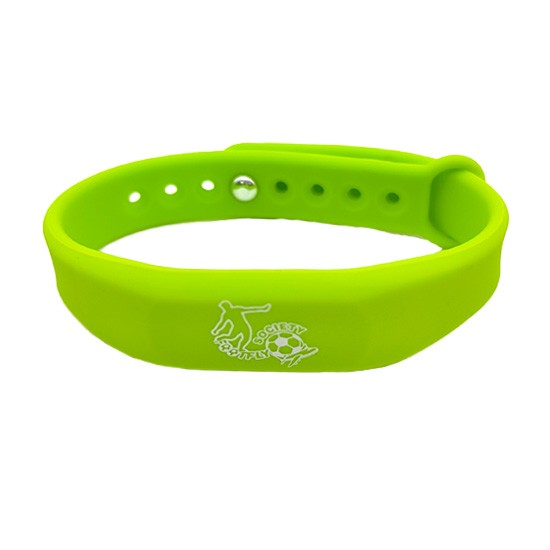
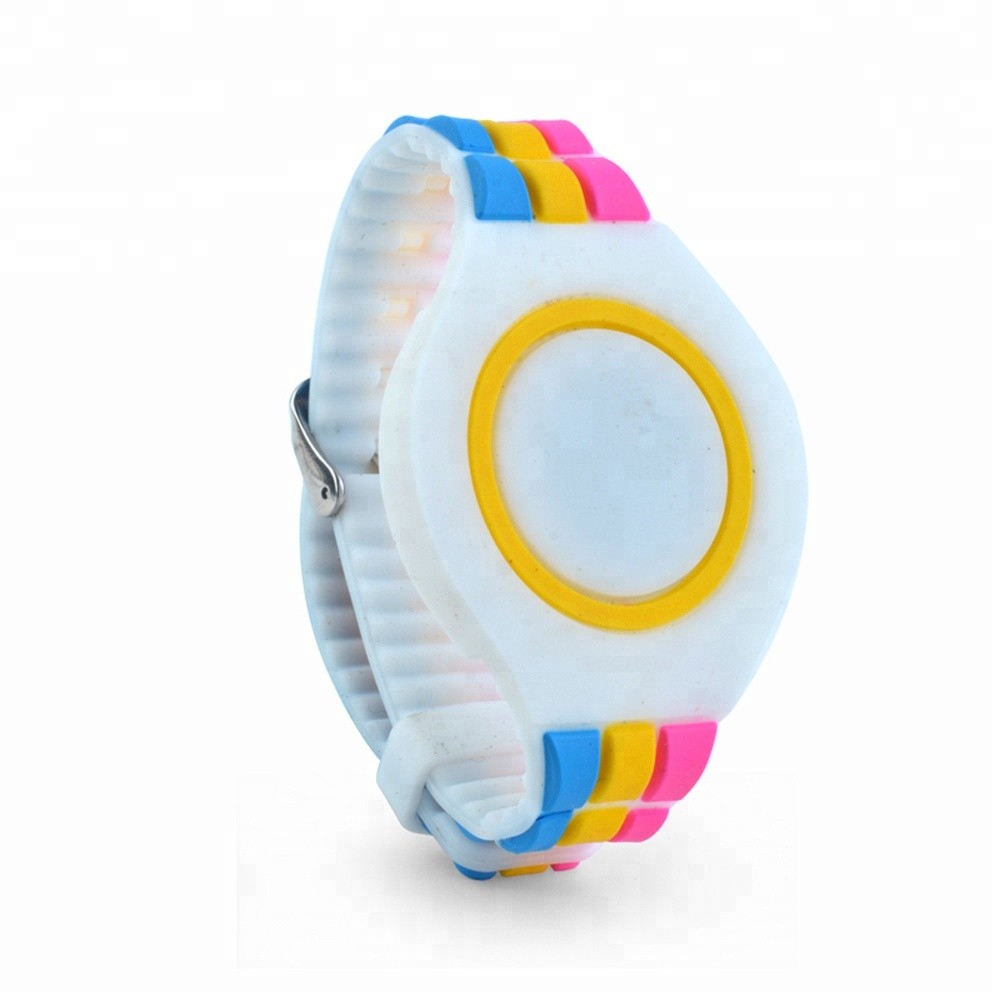
Material selection should reflect the event duration, wearing conditions, closure requirements, and whether the wristband will be reused.
|
Wristband type |
Main characteristics |
Common applications |
What to confirm |
|
Fabric / polyester |
Full-color branding and different closure options |
Music festivals and multi-day events |
Printing, chip enclosure, and lock type |
|
Tyvek |
Lightweight construction for disposable credentials |
Single-day events and large admission programs |
Adhesive closure and finished-product water resistance |
|
Silicone |
Durable construction that can be cleaned |
Recurring events, water-related venues, and membership programs |
Size, cleaning conditions, and transfer controls |
|
Elastic fabric |
Stretch fit and removable design |
Brand experiences, membership, and keepsakes |
Adult or child sizing and stretch performance |
Which RFID Chip Should You Choose?
Choose the chip required by your ticketing, access-control, or cashless system before comparing unit prices.
HF and NFC Wristbands
High-frequency wristbands operate at 13.56 MHz. Options include NTAG and different MIFARE chip families, each with its own memory, protocol, and security capabilities. A wristband intended to open a website with a phone has different requirements from one used for authenticated access or cashless transactions. Chip families should not be treated as interchangeable. For phone interaction, confirm both NFC compatibility and the required data format.
UHF Wristbands
UHF wristbands may be considered for projects requiring reading from a distance or identifying multiple credentials in a reading zone. On-body performance needs particular attention. The wearer’s body, wristband position, antenna design, and reader installation can affect results. Test samples under realistic wearing conditions.
Security and Compatibility
For applications involving purchases or valuable access rights, ask the system provider to specify authentication and key-management requirements. Matching frequency is only one part of compatibility. The reader must also support the chip's protocol, configuration, and application.
How Can You Reduce Wristband Sharing and Unauthorized Transfer?
Physical closures help restrict wristband transfer, while chip authentication and system rules help validate electronic credentials.
Useful measures include:
• One-way or tamper-evident closures.
• Correct fitting to reduce removal over the hand.
• Different designs for ticket categories.
• Re-entry rules and duplicate-use checks.
• A defined process for lost, damaged, or replaced wristbands.
A closure should not be described as completely tamper-proof. Likewise, an RFID chip alone does not guarantee protection against unauthorized use. Effective control depends on the combined wristband design, system, and event procedures.
What Can Be Customized?
Custom RFID event wristbands can include:
• Event logos, sponsor graphics, and brand colors.
• Full-color printing or other suitable decoration.
• Different lengths, widths, and wearer sizes.
• Chip enclosures and closure options.
• Individual QR codes, serial numbers, and variable text.
• Data encoding and UID mapping files.
Printed numbers, QR codes, and chip identifiers are separate data elements unless a matching relationship is specified. If each wristband needs a corresponding printed code and electronic record, confirm the data format and mapping rules before production. Approve a sample set showing that relationship.
What Should Organizers Confirm Before Ordering?
Prepare the following information before requesting a quotation:
|
Item |
Details to provide |
|
Event schedule |
Event date, wearing duration, and required delivery date |
|
Quantity |
Total units, ticket-category splits, and spare quantity |
|
System compatibility |
Required chip, protocol, configuration, and encoding |
|
Wristband construction |
Material, dimensions, closure, and chip enclosure |
|
Use conditions |
Outdoor exposure, water contact, and reuse requirements |
|
Artwork and data |
Print files, variable codes, and mapping requirements |
|
Delivery |
Destination, packaging, and shipment arrangements |
Test samples with the actual system before approving mass production. Verify reading, enrollment, access permissions, printing, fit, and closure performance. For deadline-driven events, work backward from the required arrival date. Include time for artwork approval, data preparation, testing, production, transport, and customs clearance where applicable.
Frequently Asked Questions
Are RFID Festival Wristbands Waterproof?
Some are designed for water exposure, but performance depends on the finished construction. Confirm whether the requirement involves rain, handwashing, swimming, or another condition, and request suitable samples.
Can RFID Wristbands Be Reused?
Reusable silicone and elastic wristbands can support repeated use when their condition and system configuration allow it. Wristbands with one-way closures are generally intended for a single wearing period. Physical reuse and electronic reassignment are separate considerations.
Can Attendees Read Them with a Smartphone?
Compatible phones can interact with suitable NFC wristbands. Not every RFID wristband supports phone reading, and detecting a chip does not necessarily give access to protected event data.
Do RFID Wristbands Track Attendees Continuously?
Standard passive RFID wristbands do not provide continuous GPS location tracking. They can be detected at compatible reading points, where the system may record the time and location of an interaction.
Can One Wristband Support Entry and Cashless Purchases?
Yes, if the selected chip and integrated systems support both functions. Confirm this with the system provider before ordering; combining functions is a system design decision.
How Much Do Custom RFID Event Wristbands Cost?
Pricing depends on the material, chip, quantity, printing, closure, encoding, and packaging. Sample requirements and shipping also affect the total project cost. For a useful comparison, request quotations against the same specification.
Custom RFID Wristbands for Your Event
Meihe RFID Factory manufactures RFID wristbands with custom printing, chip options, closures, and data-personalization services. Send your event date, quantity, preferred material, system or chip requirements, and artwork needs. We can help prepare a suitable hardware specification and samples for testing before bulk production.


 IPv6 network supported
Chat NOW
Scan to wechat :

Scan to Whatsapp :

 Product categories